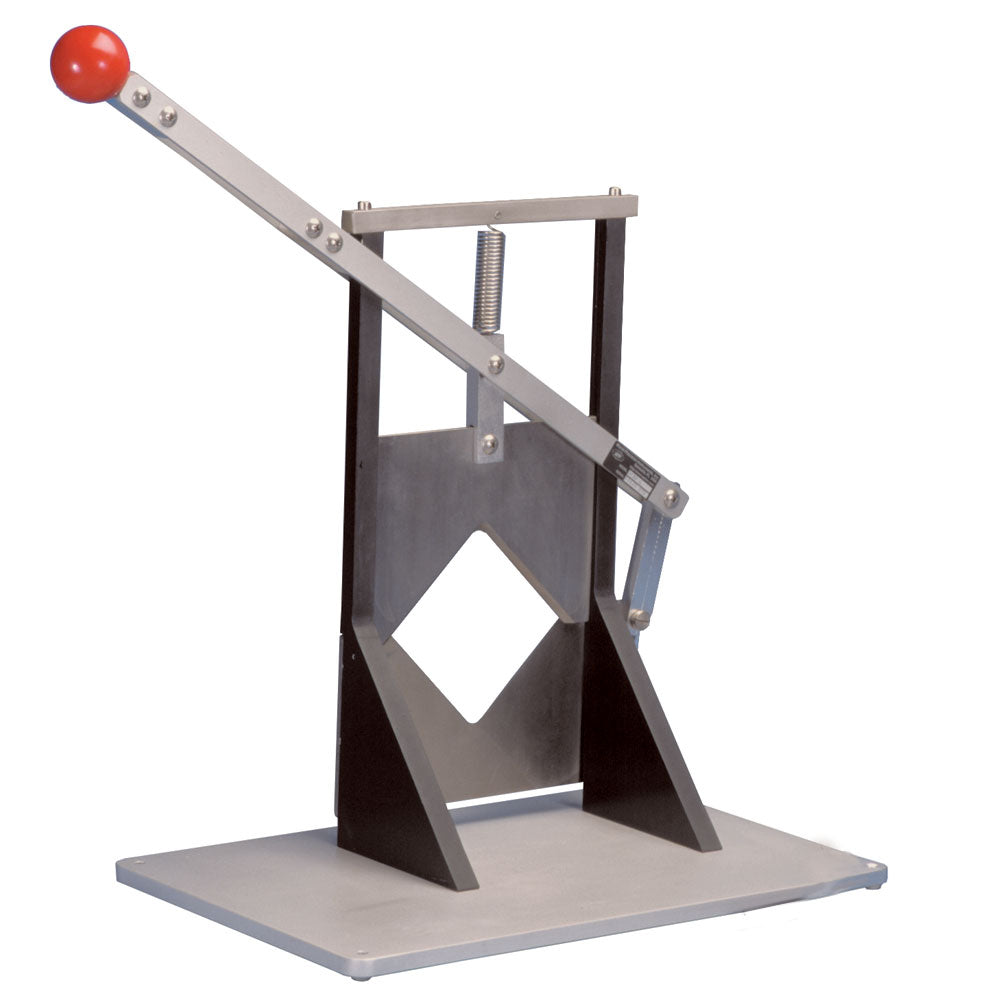
Rodent Guillotine

Skip to product information
1 of 10
Regular price $748
Sale price $748 Regular price

DCAP

Regular price From $748 - $1,796
Sale price From $748 - $1,796 Regular price

Dimension (in)

Prices valid in USA, Canada, and PR only.

A rodent guillotine is a laboratory instrument used for the rapid, humane euthanasia of mice, rats, and other small laboratory animals when approved by institutional animal care protocols. Designed for research environments, these guillotines provide a quick, consistent method of tissue collection while minimizing trauma to delicate biological structures. WPI rodent guillotines are available in three sizes to accommodate different animal models and feature hardened stainless steel blades, magnetic blade alignment, and a fluoropolymer-coated base for easy cleaning.


Details

Features

  • Guillotine designed for small animal research
  • Three sizes for mice, rats and other small animals
  • Large, stable base
  • Hardened blades ensure you get many years of service and the blades remain sharp
  • Ambidextrous configuration allows comfortable use for right and left handed people

Benefits

  • Magnetic force draws the blades together, ensuring a clean and precise cut through very strong bones and skin for a quick and humane animal termination
  • Spring action prevents blades from accidentally falling, safeguarding users
  • Fluoropolymer coated base makes cleanup easier

These guillotines are designed for small animal researchers, and they come in three sizes. The guillotine is considered one of the most humane methods of dispatching laboratory animals. With a single downward motion of the handle, you can euthanize a rodent quickly and without trauma.

Sharp Stainless Steel Blades: The blades are comprised of hardened steel so they hold an edge and remain sharp, offering years of service. Sharp blades make the process swift for both the researcher and the subject. With proper care, the stainless steel blades resists corrosion, too.

Designed for Safety: A heavy duty spring at the top of each guillotine securely holds the blade in an open position. This prevents the blade from accidentally falling and injuring laboratory personnel. It also makes it quicker to dispatch the subject, requiring only a single downward action. 

Perfect for Laboratory Use: This guillotine was designed specifically for lab work. The large base affords greater stability. The long handle provides extra leverage. The spring action prevents the blades from falling unexpectedly. The hardened stainless blades ensures longevity of the unit. The simplified construction means easy maintenance. And the fluoropolymer-coated surface on the base makes cleaning easy. The DCAP guillotine is easy to use safely in your laboratory.

Why Magnetic Blades? Unlike traditional guillotines that rely solely on blade momentum, the magnetic blade alignment system helps ensure both blades remain in close contact throughout the cutting motion. This produces a cleaner cut, reduces tissue trauma, and helps preserve tissue quality for downstream applications such as electrophysiology, histology, molecular biology, and biochemical analysis.

Options

Order code Description
DCAP For Rodents / Other Small Animals, 1.5 x 1.5 in. Opening
DCAP-M For Large Rodents / Other Medium Animals, 2.5 x 2.5 in. Opening
DCAP-L For Larger Animals, 4.0 x 4.0 in. Opening


Applications

  • Brain tissue collection
  • Acute hippocampal slice preparation
  • Neuroscience research
  • Electrophysiology studies
  • Histology
  • Molecular biology
  • Pharmacology
  • Tissue harvesting for RNA and protein analysis

Resources

DCAP Manual

Video

DCAP - Humane Dispatch of Laboratory Rodents


Specifications

DCAP Dimensions

DCAP dimension

Measurement DCAP DCAP-M DCAP-L
A 12" 16" 19.5"
B 8" 12" 15.5"
C .75" .75" .75"
D 9.25" 12.5" 15.75"
E 6.5" 8.5" 11.75"
F 3.9" 6.5" 8.6"
G 12" 17.5" 20.5"

References

These publications describe established laboratory methods that use rapid rodent decapitation for acute brain slice preparation and electrophysiological research.

Acute Hippocampal Slice Preparation and Hippocampal Slice Cultures. (n.d.). Retrieved February 15, 2021, from https://www.ncbi.nlm.nih.gov/pmc/articles/PMC3499947/

Lein, P. J., Barnhart, C. D., & Pessah, I. N. (2011). Acute hippocampal slice preparation and hippocampal slice cultures. Methods in Molecular Biology, 758, 115–134. http://doi.org/10.1007/978-1-61779-170-3_8

Ting, J. T., Lee, B. R., Chong, P., Soler-Llavina, G., Cobbs, C., Koch, C., … Lein, E. (2018). Preparation of Acute Brain Slices Using an Optimized N-Methyl-D-glucamine Protective Recovery Method. Journal of Visualized Experiments : JoVE, (132). http://doi.org/10.3791/53825


FAQs

What size rodent guillotine should I choose?

The appropriate rodent guillotine depends on the size of the animal being studied. The DCAP model features a 1.5 × 1.5 inch opening and is suitable for mice and other small rodents. The DCAP-M provides a 2.5 × 2.5 inch opening for larger rodents and medium-sized animals, while the DCAP-L offers a 4.0 × 4.0 inch opening for larger laboratory animals. Selecting the correct size ensures safe operation, proper positioning, and a clean, consistent cut.

Why does the rodent guillotine use magnetic blade alignment?

Unlike traditional guillotines that rely only on blade momentum, WPI's magnetic blade alignment system helps keep both blades in close contact throughout the cutting motion. This produces a cleaner, more precise cut through bone and soft tissue while reducing tissue trauma. Preserving tissue integrity is especially important for applications such as electrophysiology, histology, molecular biology, and biochemical analysis.

How should a laboratory rodent guillotine be cleaned and maintained?

After each use, the guillotine should be thoroughly cleaned according to your laboratory's established protocols. The fluoropolymer-coated base helps simplify cleanup by reducing tissue adherence, while the hardened stainless steel blades resist corrosion and maintain a sharp cutting edge with proper care. Regular inspection and maintenance help ensure safe operation and consistent performance over many years of laboratory use.

Why are hardened stainless steel blades important?

Hardened stainless steel blades maintain a sharp edge significantly longer than softer materials, allowing for cleaner, more consistent cuts over years of use. The corrosion-resistant stainless steel construction also withstands routine laboratory cleaning while minimizing maintenance. Sharp, durable blades contribute to improved tissue quality and reliable performance in demanding research environments.

What are the advantages of a rodent guillotine compared with other tissue collection methods?

A laboratory rodent guillotine provides a rapid, consistent method of tissue collection that helps preserve the integrity of delicate biological samples for downstream analysis. When used in accordance with institutional animal care and use protocols, a sharp, properly maintained guillotine minimizes tissue trauma and reduces the time between euthanasia and tissue harvesting. This is particularly important for applications such as acute brain slice preparation, electrophysiology, histology, RNA and protein analysis, and other studies where tissue quality can directly affect experimental results.


Rodent Guillotine

$748.00

Related Products

1 of 3