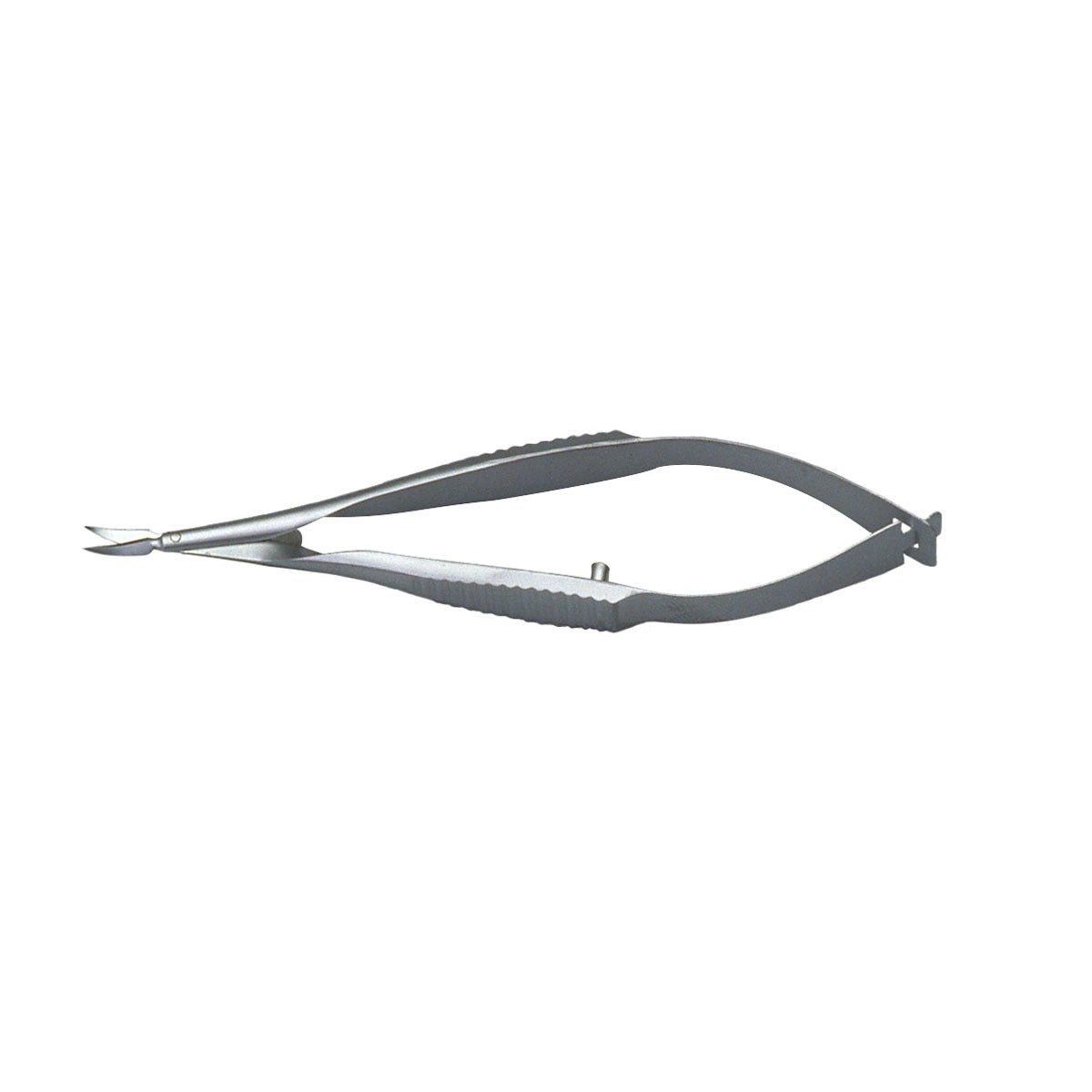
Vannas Spring Scissors, 8cm Long, 5mm Blades

Skip to product information
1 of 15
Regular price $266
Sale price $266 Regular price

501790

Regular price From $266 - $339
Sale price From $266 - $339 Regular price

Tip Shape

Prices valid in USA, Canada, and PR only.

Our vannas scissors are specialized spring scissors designed for precision cutting and often used by scientific researchers. They are named after the Swedish scientist Gunnar Vannas who invented them in the 1940s. Compared with other spring scissors, vannas scissors are distinguished by their delicate, thin, sharp tips. The slender, pointed tips allows for precise cutting with minimal damage to surrounding tissues. Manufactured with surgical grade stainless steel, these scissors are durable and resistant to corrosion.


Details

WPI's Vannas Spring Scissors are precision spring-action micro-dissection scissors, 8cm long with 5mm blades and 0.1mm tips built for fine, repetitive cutting with minimal tissue damage in neuroscience, cell biology, and microsurgery. These 8cm scissors have 5mm blades and 0.1mm tips, available in straight, curved, or angled configurations, each in standard or German surgical-grade stainless steel. The spring-action handle returns the blades to open position automatically after every cut, and the slender, pointed tips allow precise cutting with minimal damage to surrounding tissue.

Features

  • 8cm (3.5") overall length

  • 5mm blades, 0.1mm tips

  • Spring-action handle returns the blades to open position automatically after every cut

  • Surgical-grade stainless steel, standard or German grade

  • Straight, curved, or angled tip configurations

Applications

Vannas scissors are a popular choice for researchers in fields that require precision cutting, such as biology, neuroscience, and microsurgery. Common applications include:

  • Microdissection of small organisms, such as insects or embryos

  • Preparation of small tissue samples for histological analysis

  • Cutting thin sections of cells/tissues for viewing under a microscope

  • Preparation of brain slices for electrophysiological studies

  • Dissection of small neural circuits

  • Preparation of brain tissue for imaging or analysis


Options

Order code Tip shape Details
14003 Straight, Standard The tip profile for Vannas Scissors
14003-G Straight, German The tip profile for Vannas Scissors
14122 Curved, Standard The tip profile for Vannas Scissors
14122-G Curved, German  The tip profile for Vannas Scissors
500260 Angled, Standard

45° angled to side

The tip profile for Vannas Scissors

500260-G Angled, German

45° angled to side

The tip profile for Vannas Scissors

501790 Angled up, Standard

Angled up

The tip profile for Vannas Scissors


Which variant do I need?

  • Straight (14003/14003-G): General microdissection, cutting in a straight line under direct view

  • Curved (14122/14122-G): Improved visibility around the cutting point, which is useful when you need to see past the blade tip

  • Angled to the side, 45° (500260/500260-G): Reaching tissue at an angle without repositioning the instrument.

  • Angled up (501790): Cutting upward or away from the viewing axis in confined surgical fields.

Standard vs. German Stainless Steel

German steel is regarded as a harder, more wear-resistant grade, suitable for labs doing high-frequency repeated microdissection. Standard stainless steel is the typical option for general use.

Standard Stainless Steel German Stainless Steel
Good for general use Harder edge, holds up under repeated use
General or occasional microdissection High-frequency, repeated micro-dissection


The tip profile for Vannas Scissors

Customers who bought this also bought:

504506

WPI Swiss made. Stainless steel, 0.1x0.06

13605

15915

Iris forceps, curved, serrated tips, stainless steel

12025

14130

Wire retractor

Resources

References

Oishi, P. E., Cholsiripunlert, S., Gong, W., Baker, A. J., & Bernstein, H. S. (2011). Myo-mechanical Analysis of Isolated Skeletal Muscle. Journal of Visualized Experiments, (48), e2582–e2582. http://doi.org/10.3791/2582 

Anderson, C., Zhou, Q., & Wang, S. (2014). An Alkali-burn Injury Model of Corneal Neovascularization in the Mouse. Journal of Visualized Experiments, (86), e51159–e51159. http://doi.org/10.3791/51159


FAQs

What are Vannas spring scissors used for?

Precision microdissection in neuroscience, cell biology, and microsurgery, including dissecting small organisms (insects, embryos), preparing tissue samples for histology, cutting thin cell/tissue sections, preparing brain slices for electrophysiology, and dissecting small neural circuits.

What's the difference between straight, curved, and angled Vannas scissors?

Straight is best for general dissection under direct view. Curved improves visibility around the cutting point. Angled (side or up) lets you reach tissue without repositioning the instrument. See the selection guide above for the full breakdown.

Is German steel worth the price difference over standard stainless?

German steel is generally regarded as a harder, more wear-resistant grade, making it the better fit for labs doing high-frequency, repeated microdissection. Standard stainless steel is the typical option for general or lower-frequency use.


Vannas Spring Scissors, 8cm Long, 5mm Blades

$266.00